
Regarding The Roots Picnic
JAŸ-Z ran the table, but he couldn't own the Plateau

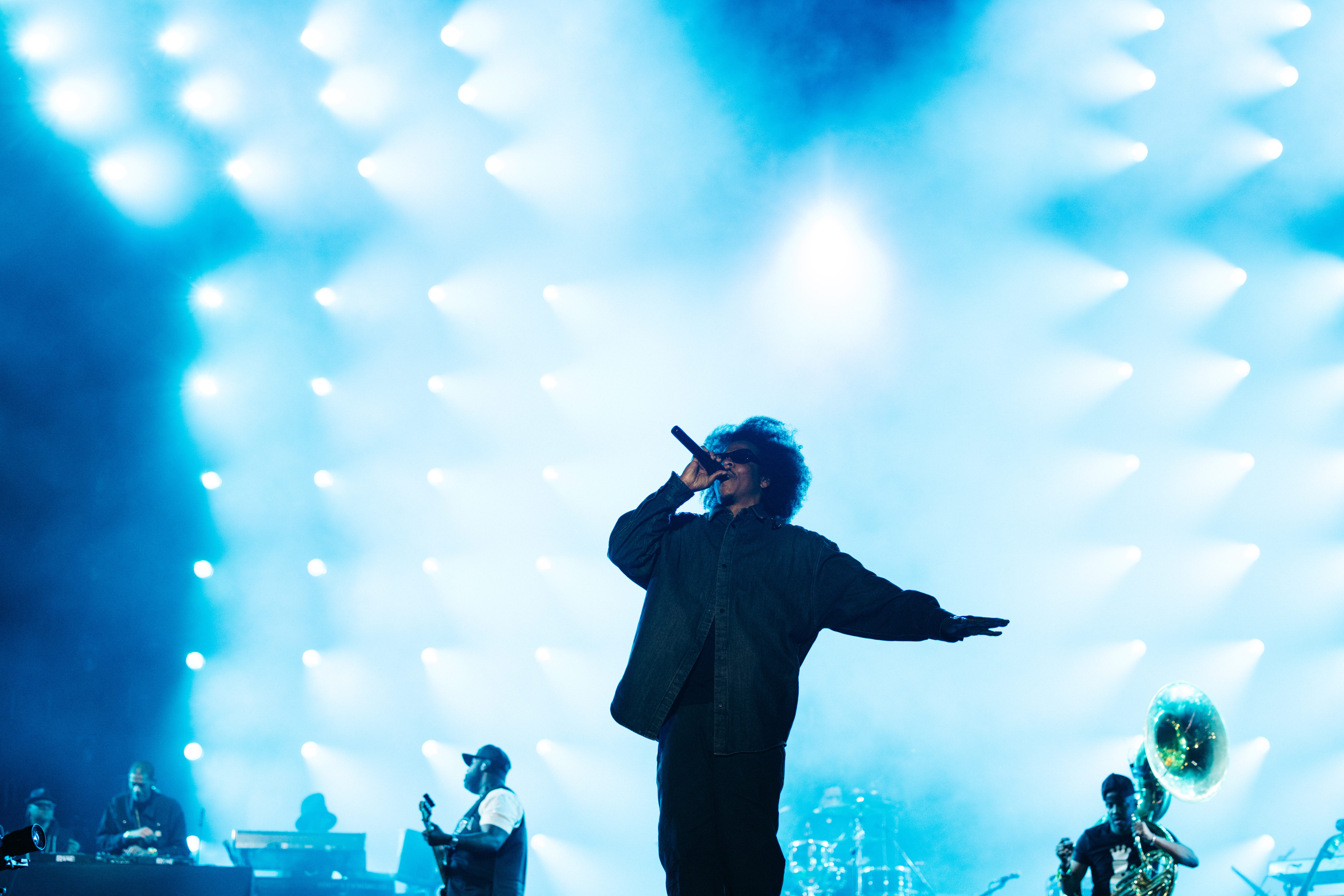
JAŸ-Z pulled up to The Roots Picnic prepared to make a meal out of the metanarrative.
First: a strange silhouette in a blue haze, crowned by an unfamiliar nimbus. The Afro was the first reveal1 — in which he reveled, surveying the crowd in imperial silence for 40 seconds. Then came the delirious bombast of “Hovi Baby,” followed by a second reveal. If you’ve read one thing about the headlining set last Saturday on Philadelphia’s Belmont Plateau, it surely has something to do with this.
I’m referring to an a cappella freestyle overstuffed with score-settling takedowns, talkbacks, and take-backs — red meat for Rap Radar and its ilk, a cottage industry that prizes nothing more than Beef.2 As soon as shots had been fired, online sleuths were cataloguing bullet casings: these strafed Nicki Minaj, these others hit Drake. Billboard eventually published an explainer: “Here’s Everyone Jay-Z Appeared to Diss During His Roots Picnic Freestyle.” The freestyle was engineered for such forensic treatment, as the author of Decoded mic-checked references, Vibe-coding.
In the moment, standing in a throng at stage left, I surrendered to the Fight Night clamor, all those ohhhhs and ayyyys that greeted every lyrical jab. But I’m the sort of hip-hop listener who doesn’t bother to keep up with feuds. I agree with Jayson Buford, who points out in Rolling Stone that Jay-Z’s freestyle “was a reminder of the strange position he now occupies: still one of rap’s most dangerous technicians, but also a mogul institution whose grievances carry the weight of boardroom power.”
This was my fourth Jay-Z show, and I keep second-guessing my urge to proclaim it the finest. The one that previously held that distinction was All Points West in 2009, where he opened with a glorious “No Sleep Till Brooklyn” for Adam Yauch, who’d recently received his cancer diagnosis. I reviewed two other Jay-Z concerts for the NY Times: in 2006 I clocked him in Brooklyn, unfurling banners from Kingdom Come; the following year, in the American Gangster era, I chronicled a board meeting3 at the Hammerstein Ballroom, with surprise guests Lil Wayne (ayyyy) and Diddy (ewww) among Roc-a-Fella stakeholders like Beanie Sigel, Freeway and Memphis Bleek.
Those last three were back in the mix at The Roots Picnic, rotating in from a bullpen heavily weighted with Philadelphia talent — like R&B singers Jazmine Sullivan and Bilal, who filled in to finesse hooks respectively from “Feelin’ It” (originally featuring Mecca) and “No Church in the Wild” (a Frank Ocean joint). Memphis Bleek and Beanie Sigel jumped on for the boisterous posse track “You, Me, Him And Her.” Then in came Peedi Crakk for a taste of “Gotta Have It,” before Freeway emerged for “Roc the Mic,” an anthem by the 215 hip-hop collective State Property. Jay-Z stood back for most of the song, hanging around near the drum riser — but he backed Freeway and Beanie Sigel with total investment, swaying in time, hyping the rhymes.
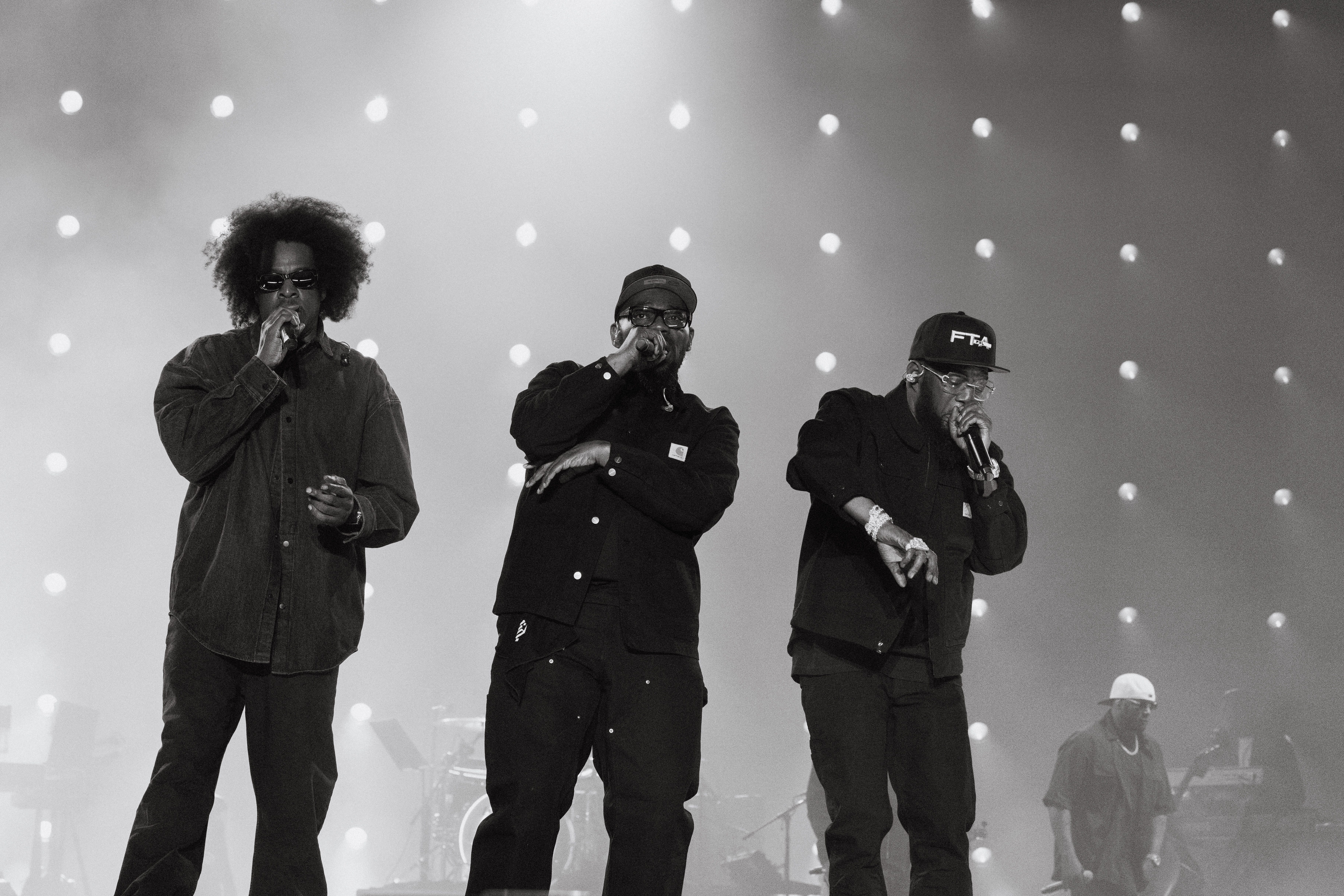
Beyond the Philly of it all, I loved this stretch of the show for its collegiality, which has always been an undervalued part of the Jay-Z portfolio. However much he burnishes his street-hustler legend and top-of-the-heap mogul status, he clearly has a blast whenever he’s rolling with a crew. That pointedly includes The Roots Crew, which backed him on MTV Unplugged 25 years ago, back when Hub was still on bass. That chair now belongs to Adam Blackstone, whose hookup with Questlove’s backbeat, bolstered on the bottom end by Tuba Gooding, Jr.’s sousaphone, runs from blusterous heat to bouncy euphoria to rock-solid groove. As we’ve seen them do on countless other occasions, The Roots handled every shift and segue in the show with the fluid traction of a sports coupe on the Autobahn.
Jay-Z, who has always rapped with a sly melodic lilt and a flexible rhythmic pocket, made the most of this deluxe backing — and crucially, showed that he understands its value. He was surely referring to Questlove and The Roots as well as fellow rappers like Meek Mill (who briefly took over the stage to spit his own “Dreams and Nightmares”) when he ad-libbed an exhortation: “Philadelphia, you should be proud of yourself! Some of the most talented people in the world come from this state.”4
The Roots Picnic, held every year (with a couple of pandemic exemptions) since 2008, is always on some level a manifestation of that local pride. I noted this last year, when its main attractions included a 30th anniversary celebration of The Roots’ major-label debut, Do You Want More?!!!??! Jay-Z’s headlining stand at the Roots Picnic was, in turn, timed to mark the 30th anniversary of his own debut, Reasonable Doubt, which gave us “Feelin’ It” as well as an unimpeachable highlight, “Dead Presidents” (with lyrical elements from both the promotional single and the album version).
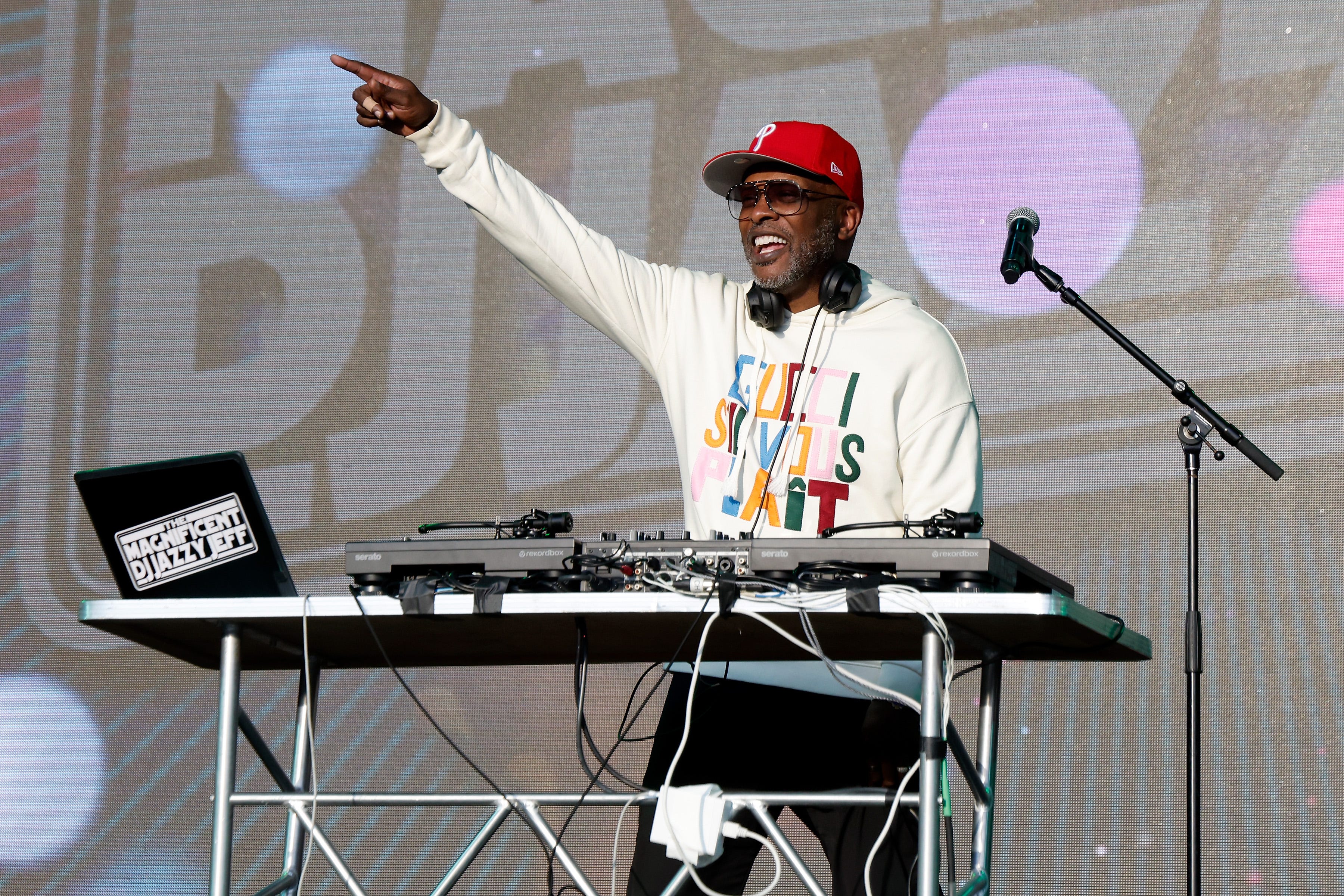
This was the first year that The Roots Picnic took place at the Belmont Plateau in Fairmount Park, which Questlove and his fellow festival organizers have said was always a dream locale. For Black Philadelphia, it’s a civic site connected to liberation history but also a spot as reliable and readily accessible as a shared backyard. Hours before Jay-Z took the AT&T Stage with The Roots, DJ Jazzy Jeff could be found on the Plateau Stage, literalizing the concept of “the Plat” as summer block party central.
At one point I heard him spin Stan Getz and Luiz Bonfá’s “Saudade Vem Correndo,” scratching around the end of each eight-bar phrase, before he cross-faded to a track built on its core sample: “Runnin’,” by The Pharcyde. There were other vintage delights — some Beasties, some Run-DMC — before he dropped the inevitable “Summertime,” which he released with The Fresh Prince in 1991.
The place called the Plateau is where everybody goes — that’s the relevant line on this track, and when it arrived, Jeff looped it for a while, turning it into a chant and an invitation. “Everybody” in this case included the Philly MCs Malika Love, rapping her late-‘80s cut “Co-Rock Steady,” and Robbie B, who held a mic in one hand and a bottle of Deer Park spring water in the other, as if he’d just been pulled onstage from a family barbecue. Then came members of Tuff Crew for “My Part of Town” (choice lyric: “You’re not the future, you’re history”) before a moment I could scarcely believe, as Schoolly D bounded onstage to rap “Parkside 5-2,” a song I first heard on cassette not long after its release in 1987. That’s a distance of almost 40 years and 6,000 miles, and I never imagined I would get to see it performed — in its place of origin, no less. The vibe was so elevated that only a walk-on by Black Thought of The Roots could take it higher, as he did, dropping a vintage anthem (“Without a Doubt”) as well as part of his instant-classic Funk Flex freestyle (the “Cain and Abel” section).
Hip-hop isn’t the only vector for time travel at The Roots Picnic. R&B served up contemporary standard-bearers like Kehlani (who really delivered) and Sasha Keable (who largely did) and Mariah the Scientist (who mostly didn’t). But it also featured veterans like Brandy — whose Rewind Tour promised to “take it back to 1994,” and succeeded beyond any reasonable expectation, complete with Cross Colours gear and Clinton-era dance moves. Taking in this set, I was tempted to picture Brandy in the mid-credits scene from Sinners, sauntering into the bar with her fellow vampires. (I also kept mouthing the awestruck utterance by Buddy Guy’s character: “How?”)
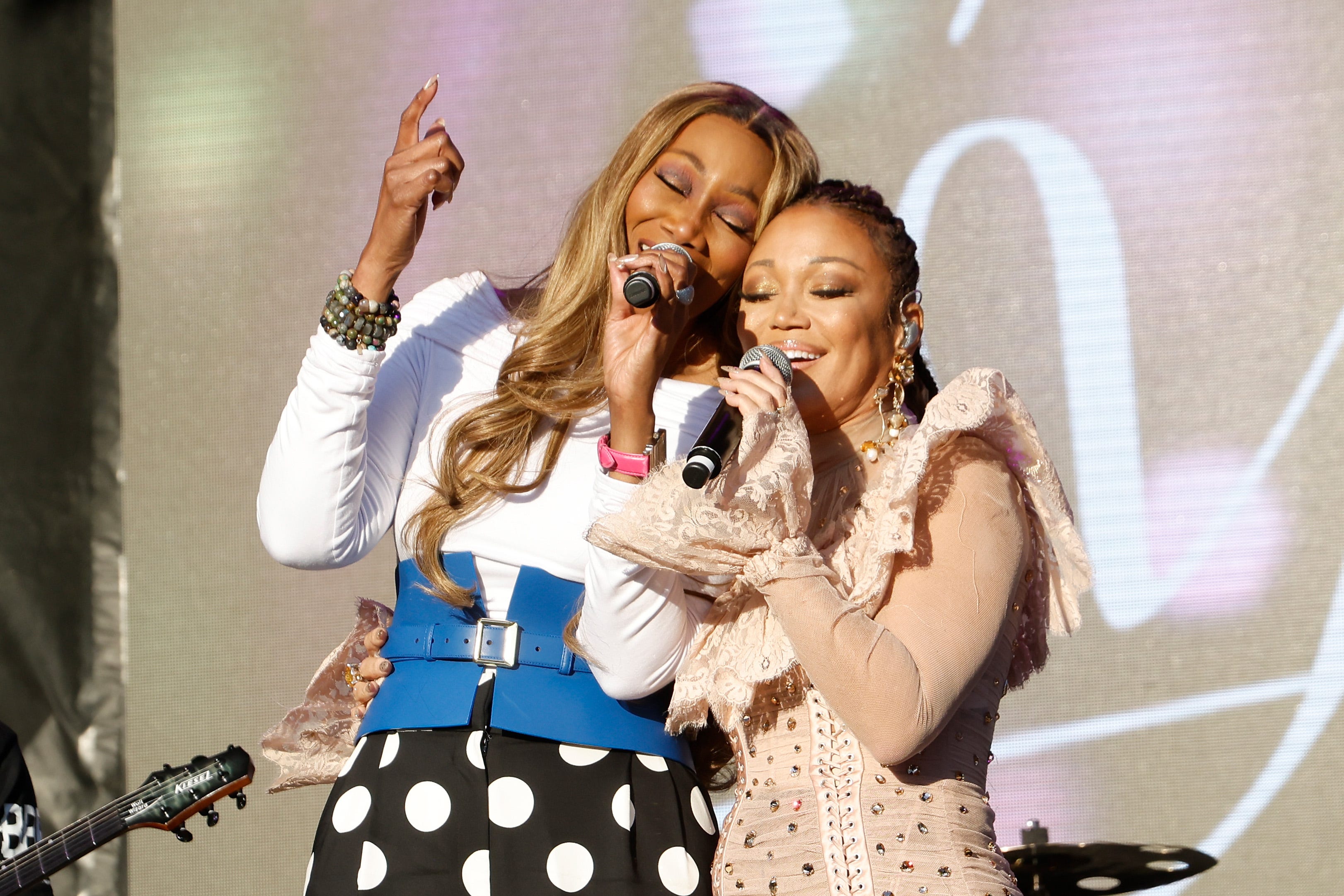
Other R&B throwbacks flew closer to ground level, like Bilal celebrating the 25th anniversary of 1st Born Second with an elastic band, and Corinne Bailey Rae marking 20 years since her self-titled debut. (Before singing “Put Your Records On,” she said she’d just heard that the song has more than 1 billion streams — presumably generating enough revenue to purchase an actual record.) There was also a tribute to the Waiting to Exhale soundtrack led by Blackstone, who called up a heavyweight cast of singers. I rolled up too late to catch Ledisi, but I saw terrific work by Andra Day (on “Exhale (Shoop Shoop)”) and Tamar Braxton (“Not Gon’ Cry”) as well as a regal Yolanda Adams, who welcomed a guest, Chanté Moore (“Count on Me”).
Erykah Badu would have been another highlight in this mode, a retro Afro-Futurist transmitting along astral frequencies. I sadly had to leave the Plateau too early on Sunday to catch her closing set, which included a few numbers with Black Thought, notably “You Got Me,” which won The Roots their first Grammy in 2000.
I did see De La Soul, whose energetic set included a welcome cameo by Talib Kweli, and the J. Period Mixtape, which along with Black Thought and Wale made space for another unbilled Golden Era hip-hop legend, Big Daddy Kane. Seeing him spit “Ain’t No Half Steppin’” went into the same bucket as “Parkside 5-2” — just beyond.
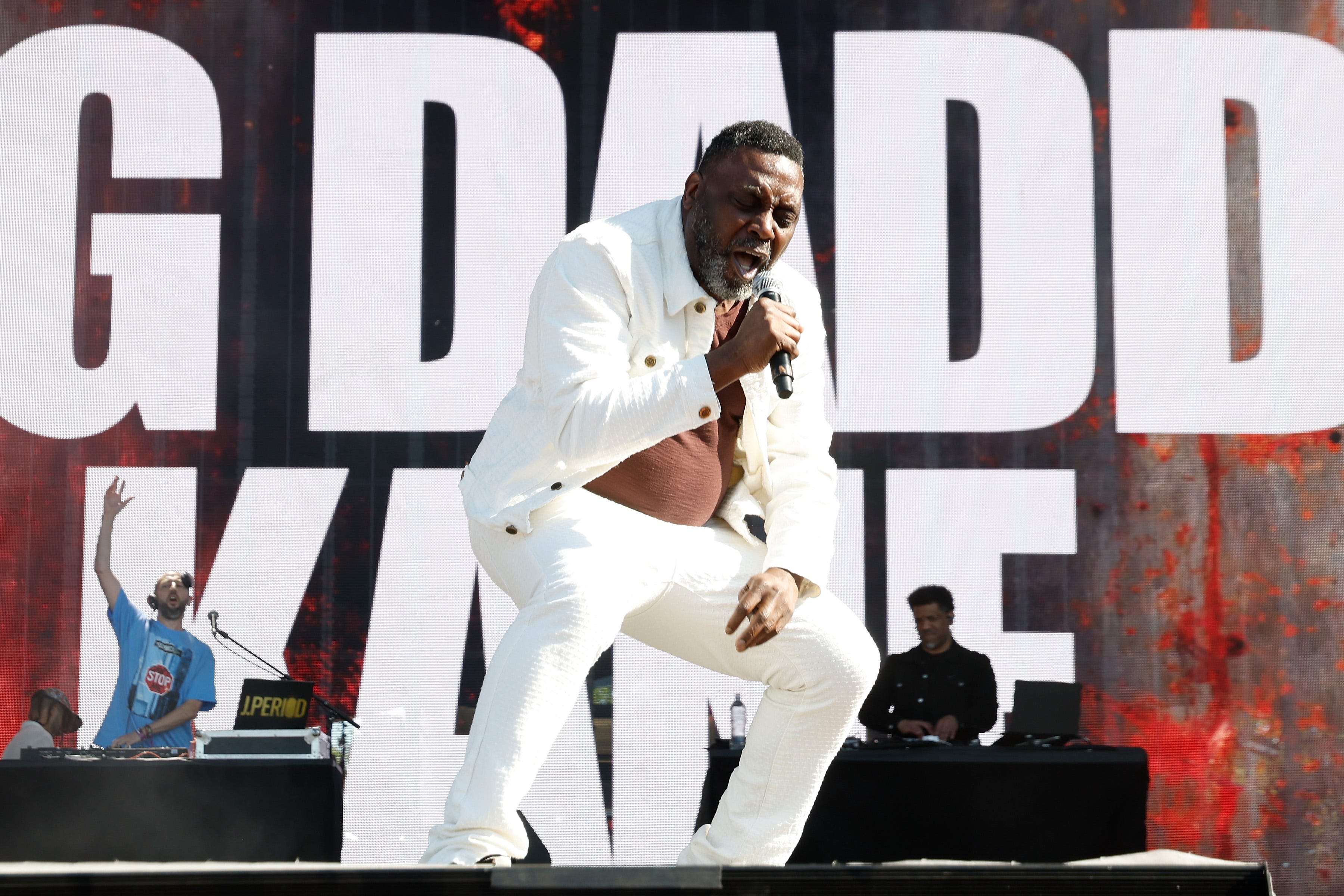
This aspect of The Roots Picnic possibly codes the event as catnip for nostalgists, the way folks used to talk (maybe still talk?) about the Essence Festival. Whether or not that’s fair, as a jazz guy I see things a different way. Hip-hop (and the adjacent strains of R&B) may represent the music industry’s purest capitalist arc over the last 50 years, but it also belongs to a Black music continuum, one that will always keep an honored place at the table for elders and innovators. Even Jay-Z, the self-mythologizing corporate bootstrapper, embraces this truth on a deeper level.
When he was recently named among The 30 Greatest Living American Songwriters by the New York Times — just set aside your gripes for the duration of this paragraph — Jay-Z sat for an interview with critic and New York Times Magazine contributor Jody Rosen. The conversation, which focuses both on the mechanics of songwriting and the seedbed of Jay-Z’s musical inspirations, illuminates a few things about him.
At one point, Jay-Z reflects on the fact that no one in his immediate family played a musical instrument, “but it was just so much music in the house that it was just innate in me to think musically, as well as I thought lyrically.” He talks about Big Daddy Kane, and the approving hand on his shoulder that effectively launched his career. And he refers to the big-brother-little-brother relationship he had with The Notorious B.I.G. — and the improv foundation that informed Biggie’s flow.
“What Biggie had was a jazz pocket that we didn’t really know we was listening to until later on,” he says. “One of his neighbors was this jazz musician who would take him to shows and things like that.” Jay-Z doesn’t name him (maybe doesn’t know him), but he’s referring to Donald Harrison, Jr., who speaks to this point in the Netflix documentary Biggie: I Got a Story to Tell. It’s one of those hidden gears in the machinery, like Questlove’s bebop studies. Whoever Jay-Z picks a fight with next, or however noisy his defense, he’s still got ears for those gears turning, and so should we.
After a decade of dreadlocks, “seeing Jay-Z with an Afro felt almost surreal,” writes Julee Wilson in a detail-rich article for Cosmopolitan, which includes comment from celebrity hairstylist Letisia Ravelo. Combing out those locs reportedly took “six days, eight bottles of conditioner, and a whole lot of patience.”
Those are NYT gift links, in case you want to follow the paper trail.
Pretty sure he meant “city,” not “state,” but it was nice to hear — even though, as Jay-Z probably knows, Philadelphians don’t need any encouragement to be proud of themselves.