
Via Chicago
Mike Reed's Chicago Inspirations, and a Jazz Day to remember

A few years ago, the New York Times Travel section published 36 Hours in Chicago, making sure to plug Steppenwolf, the Robie House, the Lakefront Trail, and the Bean. Late last week I spent 36 Hours in the Windy City and didn’t get to any of that. It was a charmed visit anyway, due to the splendors of International Jazz Day and an equally wondrous contingent concert, which we’ll get to in a moment.
Chicago was the global host city this International Jazz Day, following past destinations like Abu Dhabi, Melbourne, Osaka and Tangier. Chicago is also the city of origin for Herbie Hancock, who founded International Jazz Day 15 years ago, in his capacities as a UNESCO Goodwill Ambassador and Chairman of the Thelonious Monk Institute of Jazz (known since 2018 as the Herbie Hancock Institute of Jazz). Before flying to Chicago, I went on NPR’s Morning Edition to talk up the event, sprinkling in remarks from Hancock and fellow Chicago native Kurt Elling. It’s a three-and-a-half minute piece that I had fun throwing together. Have a listen:
Jazz Day festivities ran all last week in Chicago, but various commitments prevented me from taking part until the day of the show. I’m referring to the International Jazz Day All-Star Global Concert, which is always a starry main event. This year it was held at Lyric Opera of Chicago, and as usual, streamed in 4K. You can still watch the two-hour concert, and I recommend at least skimming highlights. The production was first-rate — by which I mean both the technical side of the webcast and the logic and logistics of the show. This review for WRTI has almost everything I have to say about it, along with excellent photographs by Jazz Day regular Steve Mundinger.
A few stray details that didn’t make it into my review:
JB Pritzker is a billionaire politician who, despite those attributes in this climate, elicits raucous cheers when he walks into a concert hall. That’s really something, and so was the warm feeling in his opening remarks. This is also a delight.
Moments after the final ovation, I ran into Howard Mandel, founder and former president of the Jazz Journalists Association. He was elated by the concert, and proud of the light it shone on his hometown. Neil Tesser, another Chicago critic par excellence, seemed to feel the same way. These guys aren’t softies; if there had been something off about the program, they wouldn’t have let it slide.
Another Chicago dude, Pope Leo XIV, really did confer a blessing on Jazz Day, expertly relayed by Dee Dee Bridgewater. “His Holiness wishes to express his sincere appreciation for the noble aims that inspire this international initiative,” she read from a prompter, “which highlights how music can foster dialogue, mutual understanding, and solidarity among people of diverse cultures and traditions.” (She put a little sauce on that last part. Can you blame her?)
During the official afterparty, one of the artists I caught up with was Kurt Elling, who embodied all the exhausted, elated relief of Joel Embiid after Game 7 against the Celtics. (What, did you want a Bulls reference here? C’mon.) I’ll paraphrase: “This city has been through so much lately — and everyone has been waiting for a moment like this to come together in music, and hit that joyous release valve.”
Mike Reed’s Chicago Inspirations
Symphony Center, May 1, 2026
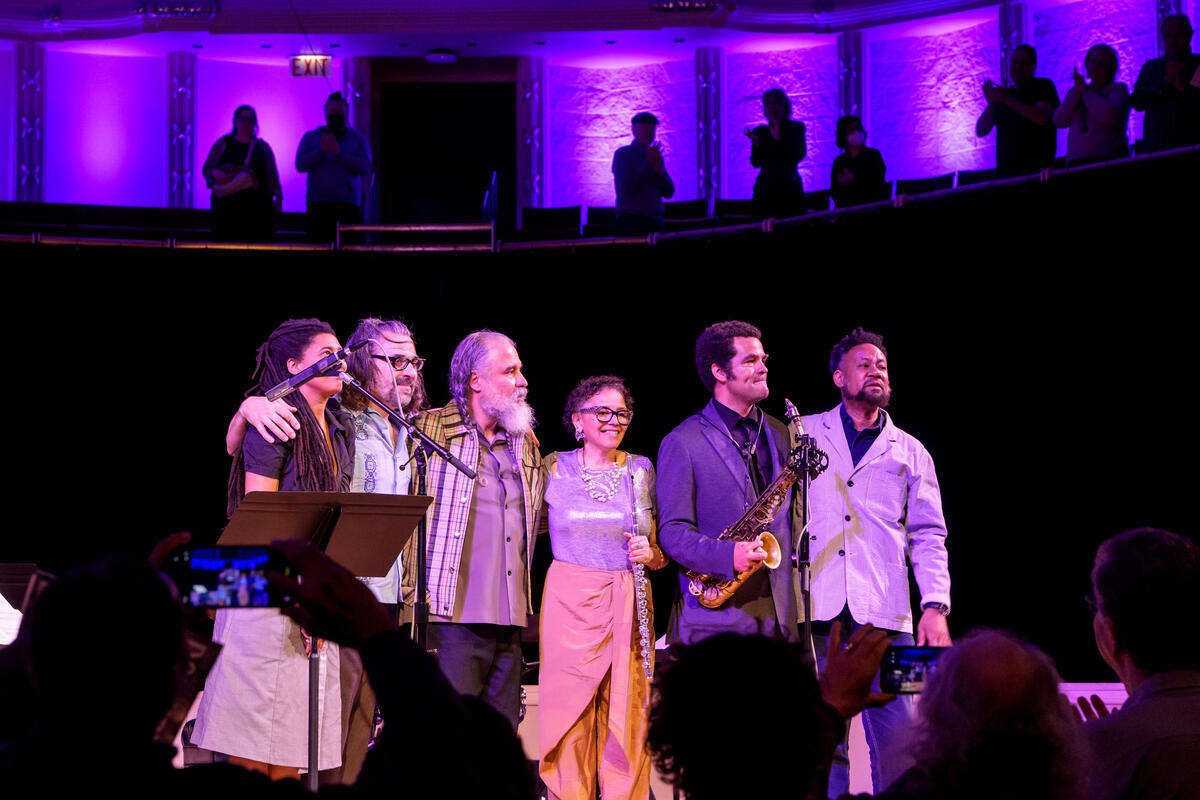
The day after Jazz Day was May Day, and in Chicago as in other American cities, thousands took to the streets to rally for democracy and worker solidarity. That evening, I basked in communal ideals of another sort, during an incredible concert by drummer, composer and organizer Mike Reed at Symphony Center, home to the Chicago Symphony Orchestra. This was a satellite event in Jazz Day literature, but it really came out of a relationship Reed has with the CSO, which previously yielded a 2018 performance of his politically charged project Flesh and Bone.
Reed is a multi-hyphenate mover and shaker in Chicago: the proprietor of two crucial music venues, Constellation and Hungry Brain; founder and producer of the pointedly eclectic Sound & Gravity Festival, which just announced its second lineup; a scholar, exponent and intergenerational bridge-builder of the AACM. That last credential was the most germane to his CSO concert, which was billed with the accurate if somewhat nondescript title Mike Reed’s Chicago Inspirations.
The first half of the concert drew meaningfully on a book of compositions he published in 2019: The City Was Yellow: Chicago Jazz and Improvised Music 1980-2010. A sort of realer Real Book with a proud Chicago accent, it gathers tunes by a broad range of composer-improvisers, some no longer with us and others still busy on the scene. One of these, saxophonist Geof Bradfield, led a combo assembled from the Jazz Institute of Chicago’s Jazz Links Program — poised teenagers like pianist Daniel Johnson, trumpeter Matthew Hufford and tenor saxophonist Anthony Olauge.
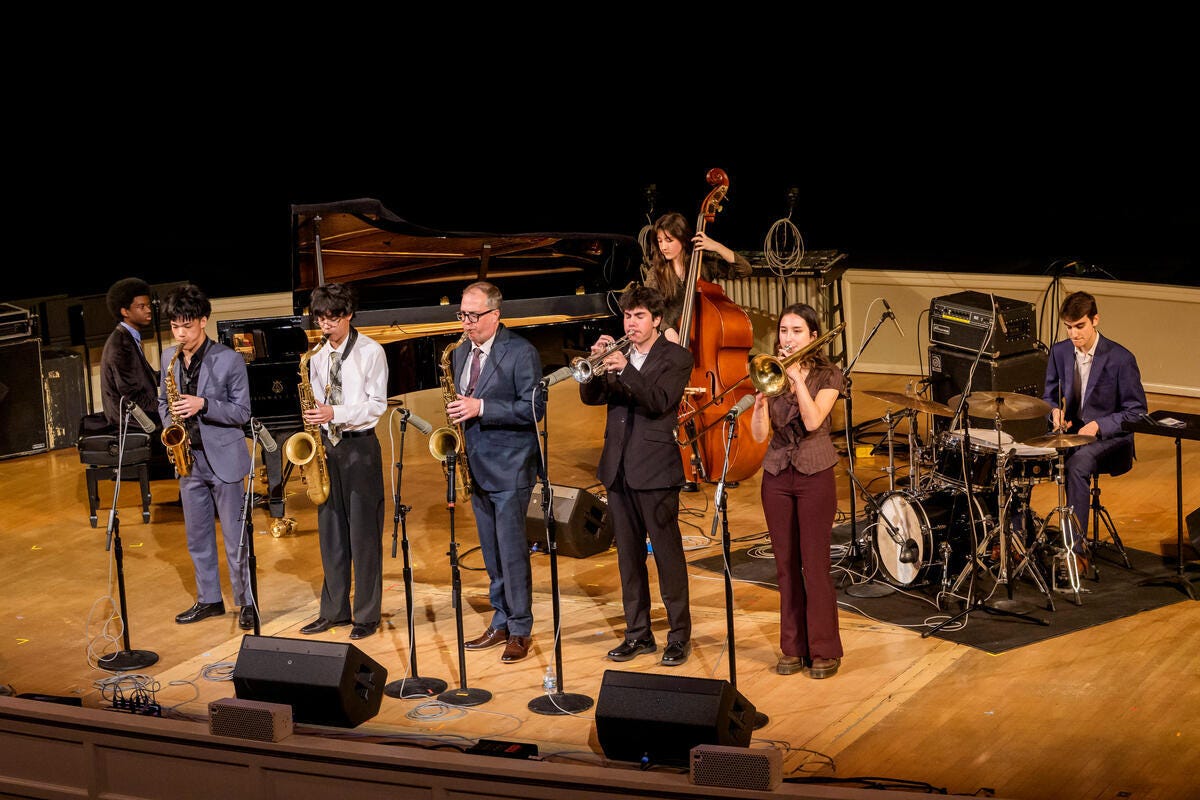
They tackled songs from Reed’s lovingly curated canon, like “Big V” by Ari Brown and “Woodlawn” by Tomeka Reid. (They also played one of Bradfield’s, a lively charger called “Nairobi Transit.”) It was inspiring to see these young musicians putting theory into practice — and with nary a piece of sheet music in sight. As Bradfield explained at the top, their performance was all about “bringing up the next generation by playing music by the last few generations.” Chicago Inspirations is right.
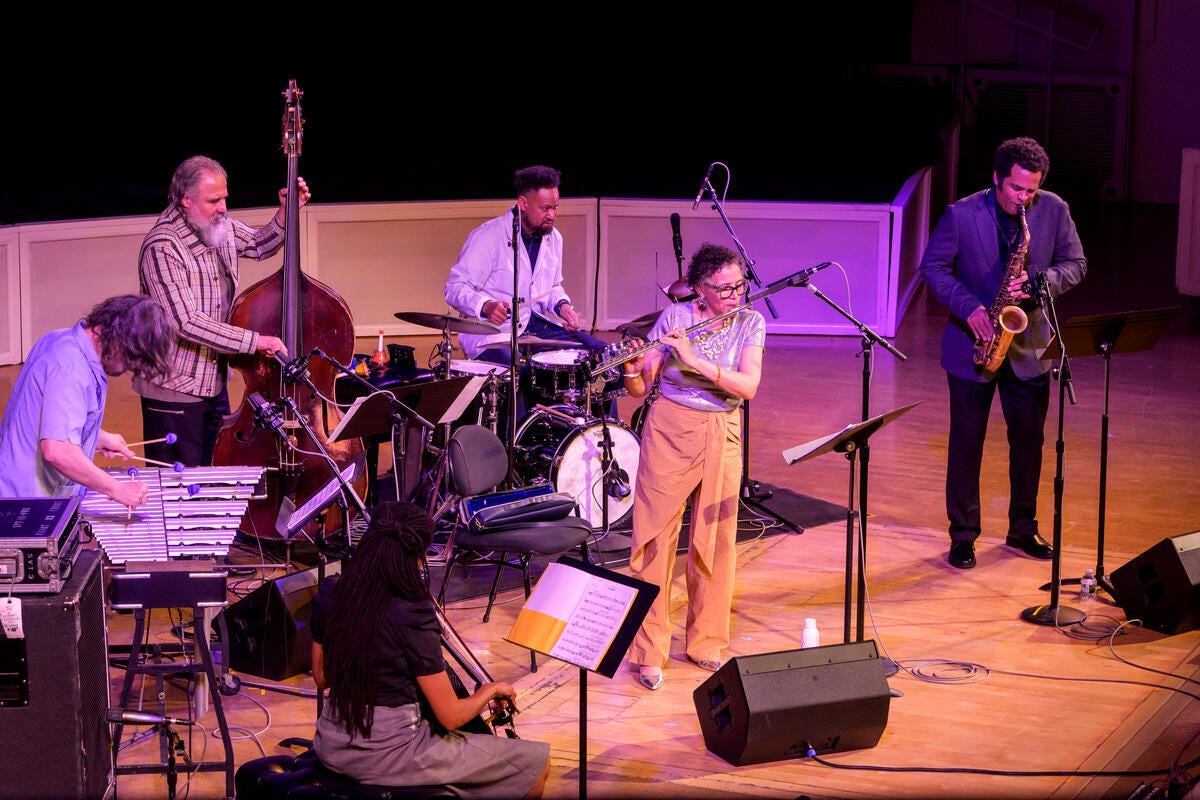
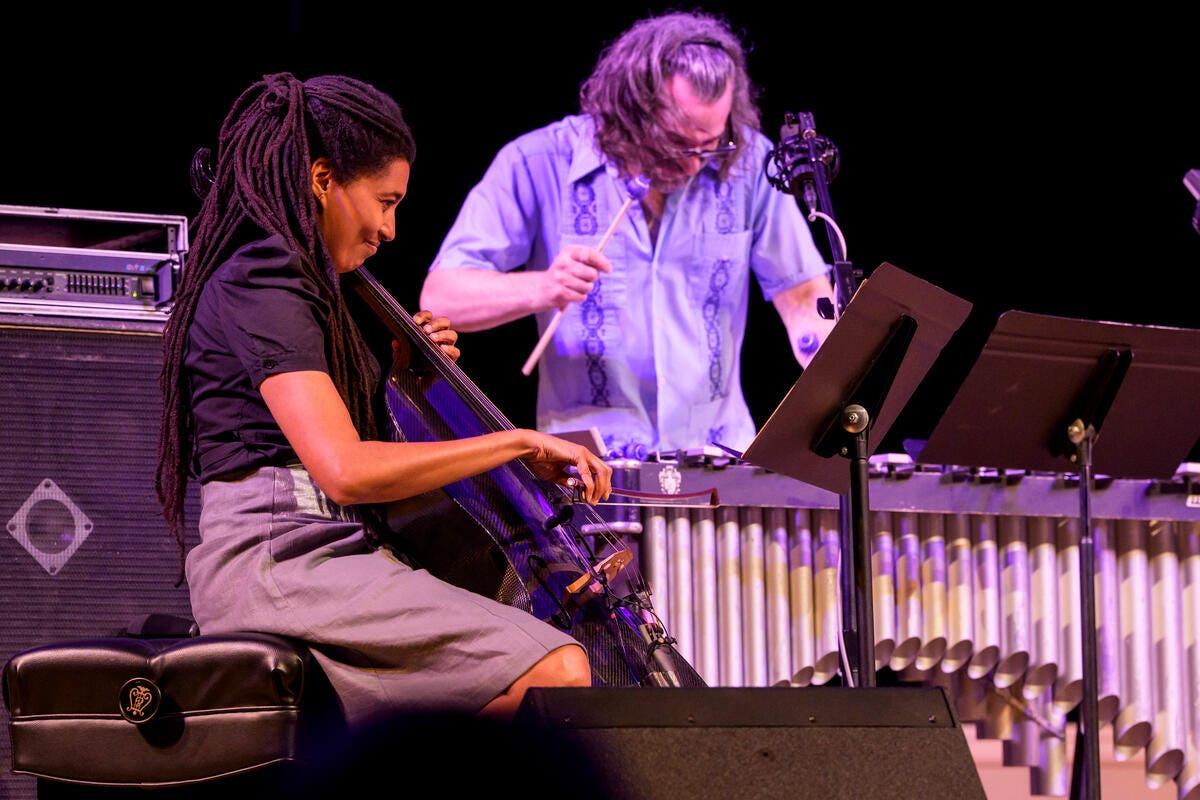
The concert’s second half brought out Reed and a veritable Dream Team: the aforementioned Tomeka Reid on cello, Nicole Mitchell on flute, Greg Ward on alto saxophone, Jason Adasiewicz on vibraphone, and Joshua Abrams on double bass. Their part of the program was “The Magic Box: Music Inspired by Chicago Bassist Fred Hopkins.” As critic Aaron Cohen reports in an essay for the CSO website, that title is a reference to an actual container of papers that Reed received following Hopkins’ premature death in 1999. (He was 51.)
Fred Hopkins was, among many other things, the bassist in Air — the category-defying trio with multireedist/flutist Henry Threadgill and drummer Steve McCall. For this occasion, Reed commissioned a new piece from Threadgill in honor of Hopkins; it was listed in the program as “Straddle,” but announced from the stage as “Threaded.” Whatever the case, this was a world premiere that whipped like a banner in high wind, rippling, rocking. The cryptic intervallic logic of the piece was classic Threadgill, while its substrate was granite bedrock groove.
I was so captivated that I neglected my notebook, and can only retrieve sensory impressions here: a rhythmically assertive flute solo by Mitchell, followed by an airy, flowing alto statement from Ward. A passage featuring Adasiewicz alone, sonically dynamic, intently focused. Every part of the premiere was robustly executed, and I hope we get some proper documentation soon.
After the Threadgill piece was successfully cleared, Reed talked amiably about the rigors therein, giving his bandmates a chance to catch their breath. What followed was a small handful of original themes, including “Flowers,” and one by Hopkins himself. The concentration among the musicians was scarily absolute, and yet at every moment it also breathed, accommodated, let go. I haven’t found footage of the concert to illustrate my point, but I did find this clip of “Medics,” posted by the CSO African American Network as a teaser. The attentive care I’m describing is right there.
Encores and Postscripts
I spent the morning of May 1 writing up some great news: that Tomeka Reid was one of three new Doris Duke Artists, alongside another Chicagoan, drummer-bandleader-producer Makaya McCraven, and turntablist Val Jeanty. Icymi, Reid joined us at WRTI recently for this episode of The Late Set.
The Pulitzer Prizes were announced today, and I spy two familiar pieces in the Music category. The winner, “Picaflor: A Future Myth,” by Gabriela Lena Frank, was premiered by The Philadelphia Orchestra in 2025, and broadcast by WRTI. And one of two finalists, “In the Arms of the Beloved,” is by Billy Childs, a jazz pianist who also composes in the classical tradition. Here it is in a recording by Anne Akiko Meyers and the Los Angeles Master Chorale.
The title of this post, in case it doesn’t ring familiar, comes from a Wilco song. Last week I wrote a little about the NYT Magazine’s 30 Greatest Living Songwriters list. (Thanks to all who engaged with it, even if your engagement took the form of good-natured heckling.) As you may know, Wilco frontman Jeff Tweedy was among the artists polled, and the last name he put on his ballot was his own. If you love “Via Chicago” like I do, you understand that urge. Here’s the version from Kicking Television: Live in Chicago, recorded in 2025.
Sounds like an amazing show. I celebrated International Jazz Day by catching a rare Los Angeles show by Dafnis Prieto and his quartet. Added bonus was listening to Greg Bryant on KKJZ on the drive to the club.
This warmed my heart. Thank you for your reportage.